
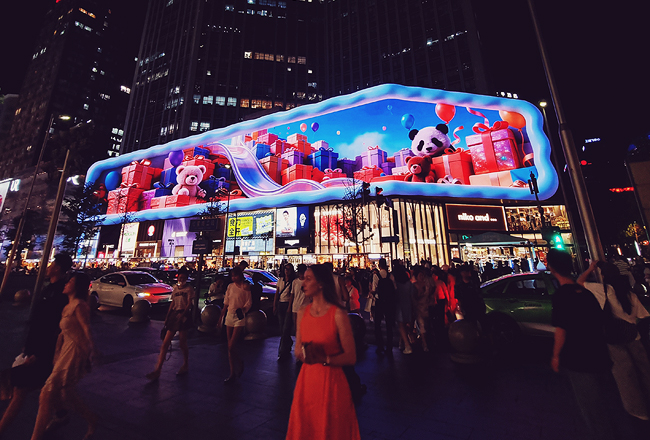
Chengdu has earned a reputation as China’s capital of slow living, hedonism, and playful charm. After a week in Chongqing we hopped on a train and arrived one late evening in Chengdu. The short two hour trip was a delight, as the sun was setting between vast hillsides full of rich green fauna.
What I loved about Chengdu was:
-
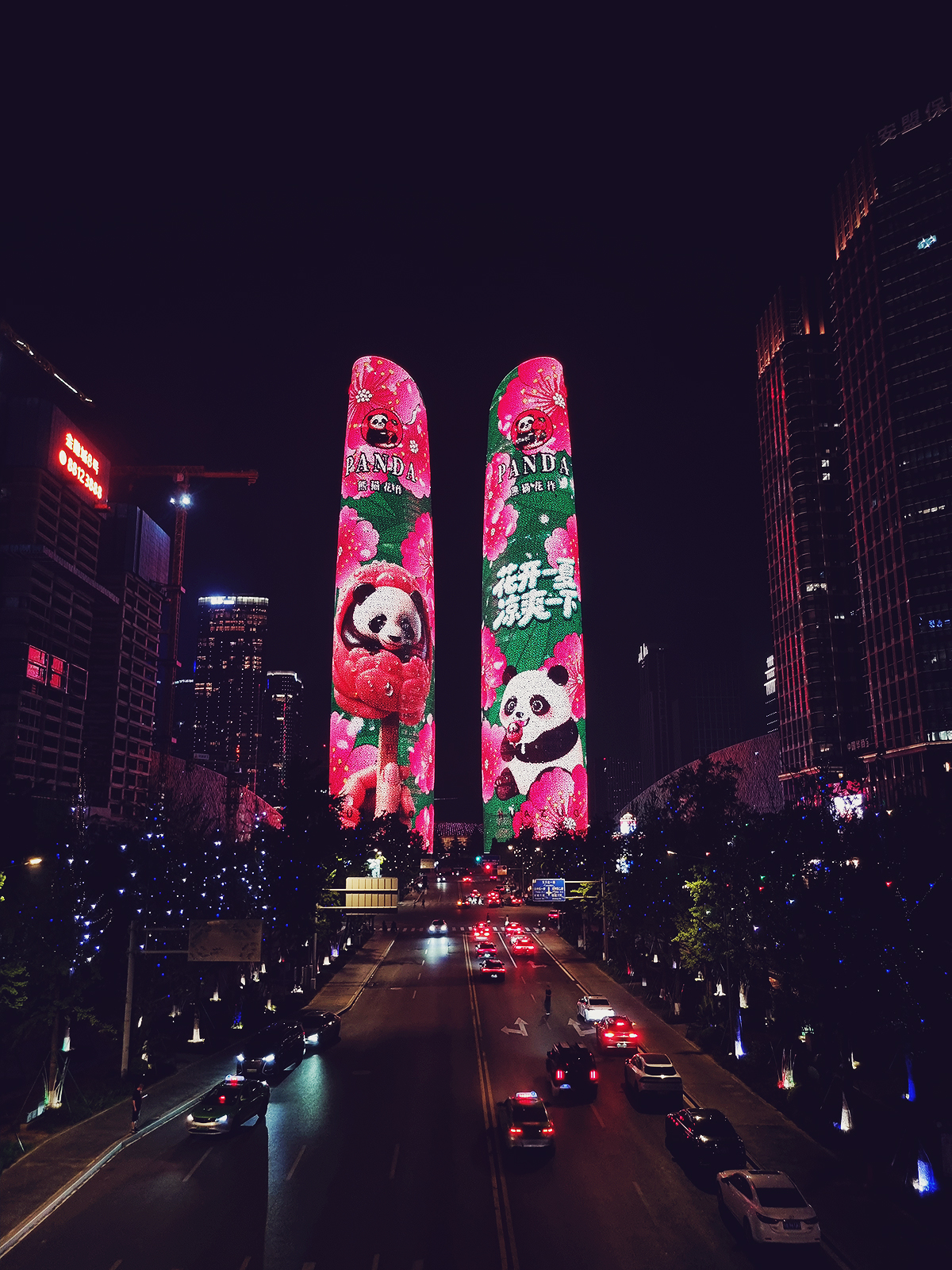
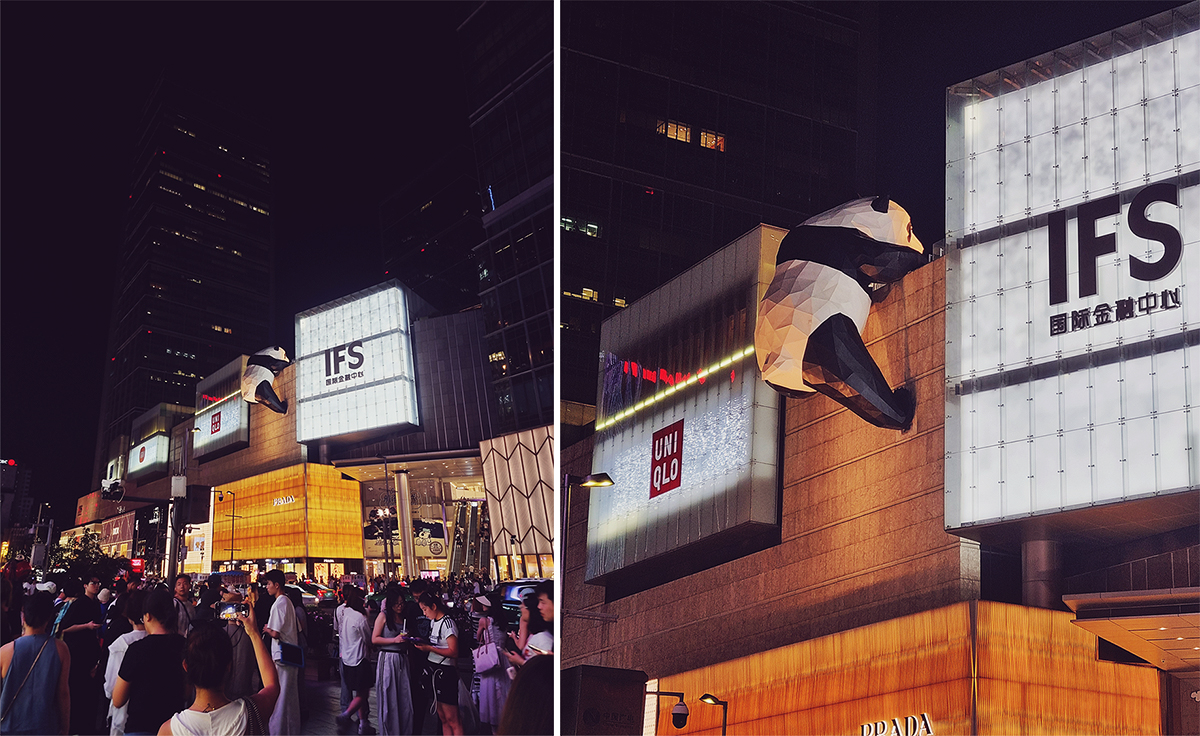
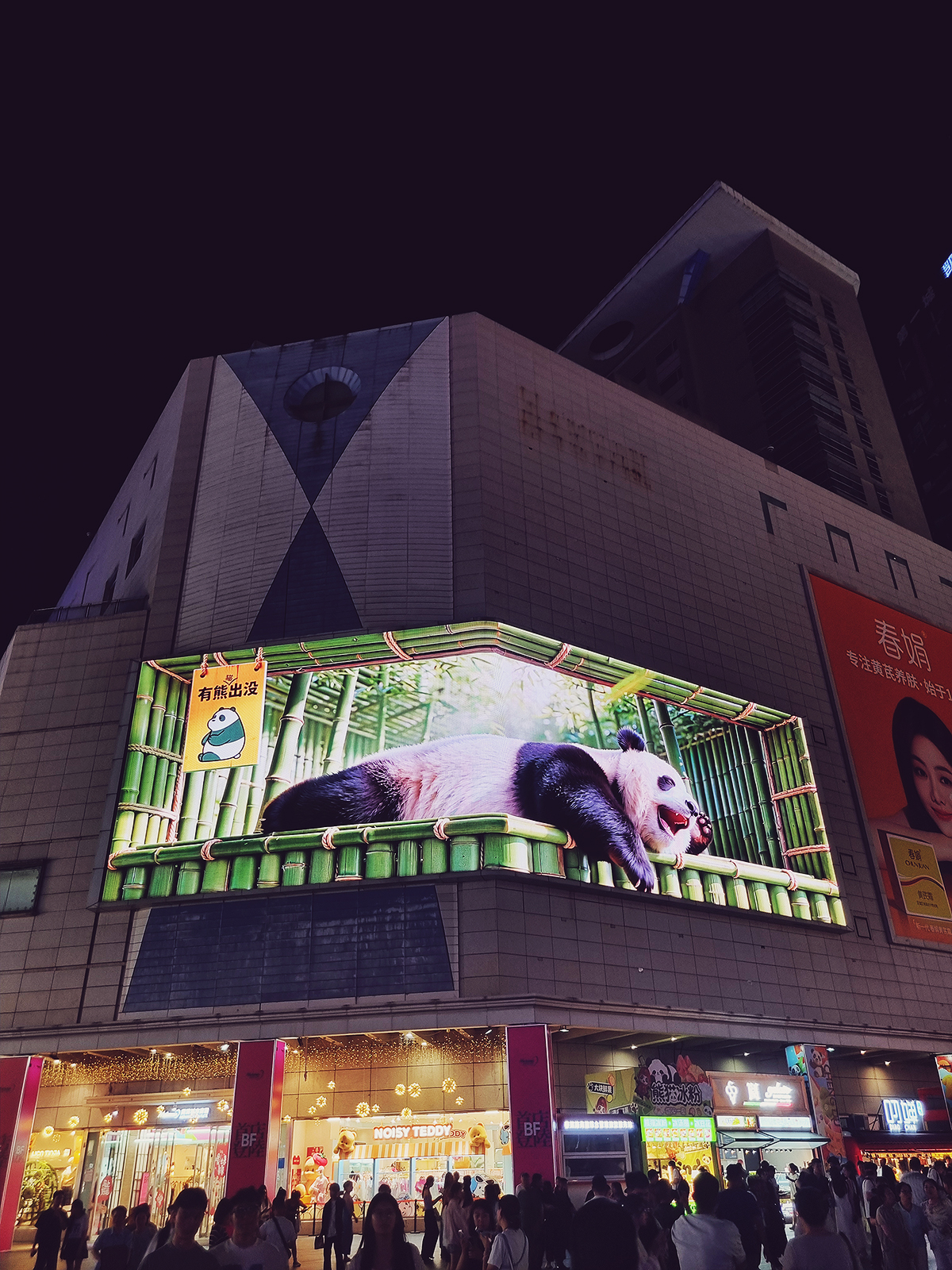
The Pandas Are a Complete Spatial Identity: Beyond the giant 15-meter panda scaling the IFS building or the digital ones lit up on the Tianfu Twin Towers, the city is saturated with panda-themed public infrastructure. You will find panda-shaped city buses, panda subway cars with bamboo-styled handrails, and even panda-faced police booths.
-
It is the “Teahouse Capital of the World”: Chengdu historically boasted more teahouses than almost any other city on earth. Rather than drinking tea on the go, the local bànbèn culture involves sitting in low bamboo chairs for 6–8 hours, sipping Jasmine tea (huāchá), playing Mahjong, and chatting the afternoon away. The teahouses are a must in every park and every green space.
-
The professional Ear Cleaners (Cǎi Ěr): A traditional teahouse ritual involves professional ear cleaners who use long, vibrating silver needles and feather picks. The soft ring of their tuning forks reverberates down the street, offering a uniquely relaxing sensory experience that locals consider an art form. Go if you’re feeling adventurous with your ears. I wasn’t.
-
The Realm of Spicy & Numbing (Málà): Sichuan cuisine doesn’t just use chili heat; it relies on the Sichuan peppercorn (huājiāo), which produces a tingling, vibrating numbness on the tongue. In Chengdu, this sensory signature shows up in everything from late-night street food skewers (shāokāo) to modern artisanal málà gelato and coffee. For me, the málà sensation was much stronger: it number my throat also, but only on the very first try.
-
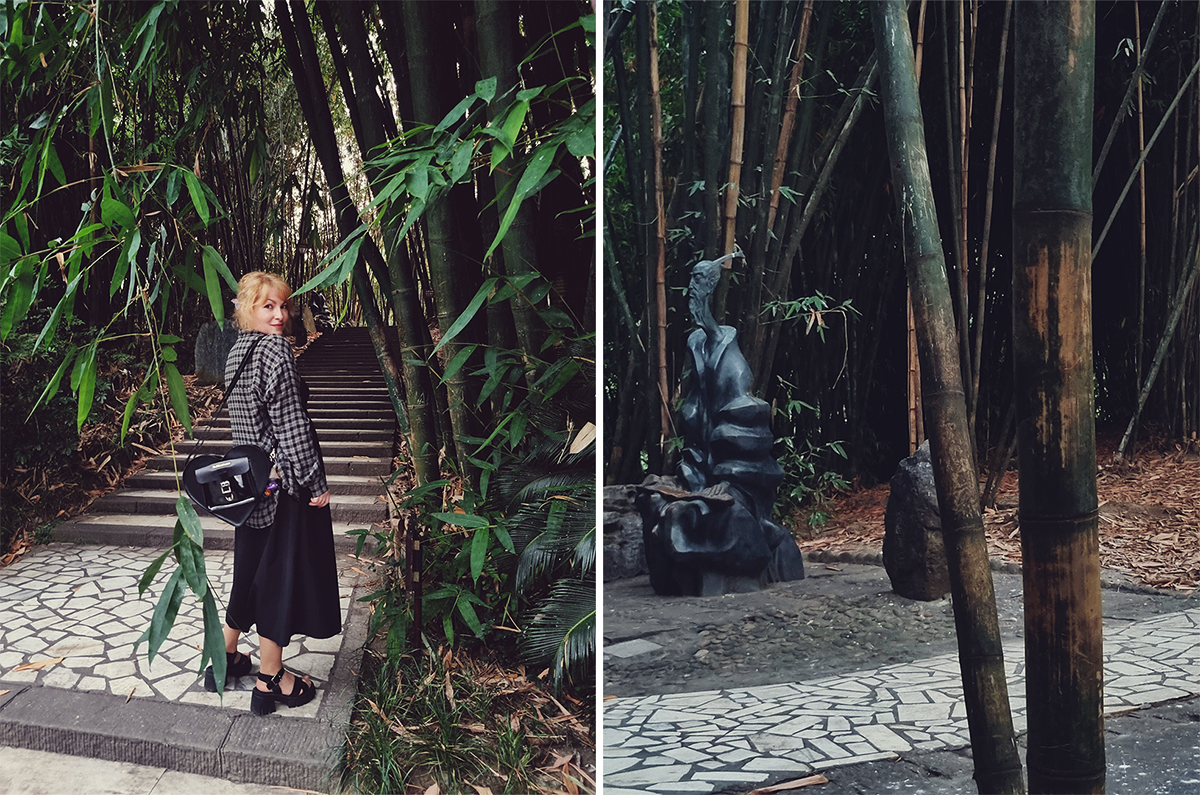
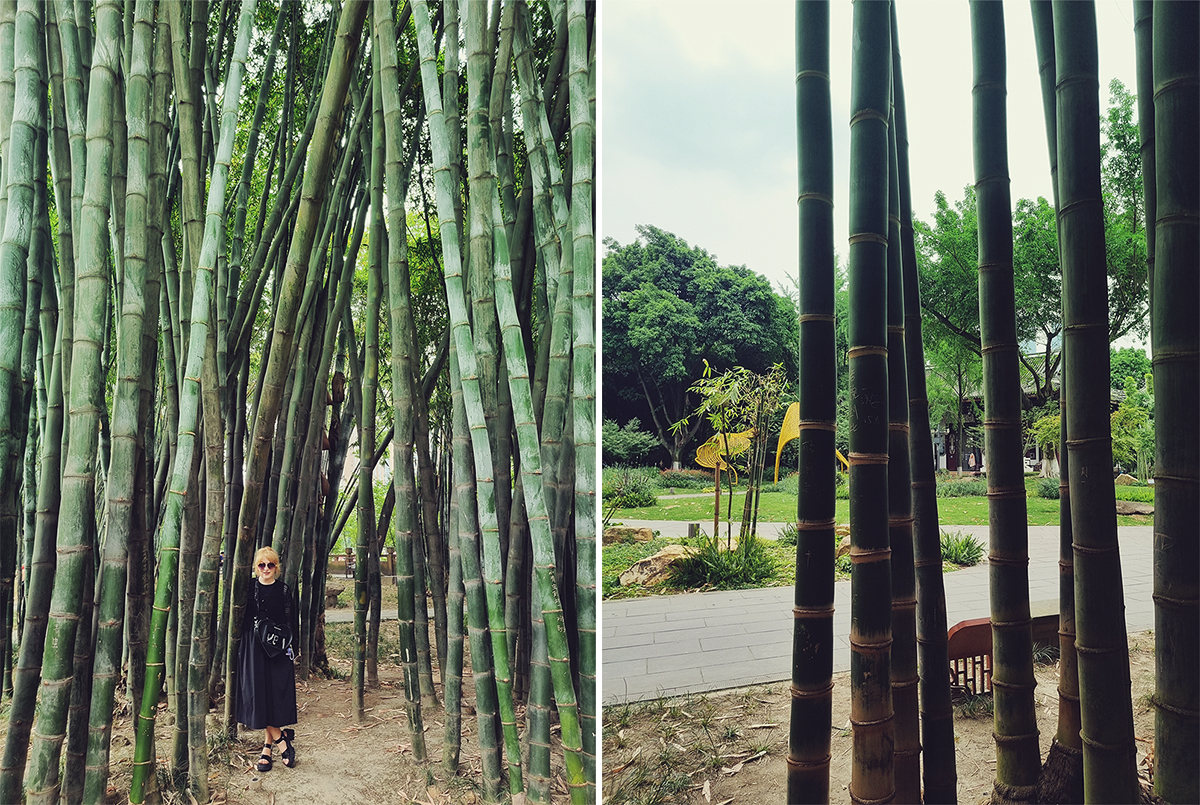
It’s a Hidden Botanical Haven: The city’s love for greenery extends far into its literary history. At Wangjianglou Park, over 200 distinct varieties of bamboo from across the globe grow along the riverbanks—a living homage to Tang Dynasty poet Xue Tao, who celebrated bamboo’s elegance in her work.
-
This City Never Rushes: There is a famous Chinese idiom about the region: “Do not enter Sichuan in your youth, and do not leave Sichuan in your old age“. It playfully warns that Chengdu’s gentle, leisurely pace and focus on life’s simple pleasures will destroy your career ambition because you’ll simply never want to work hard again. Quite a lovely thought.
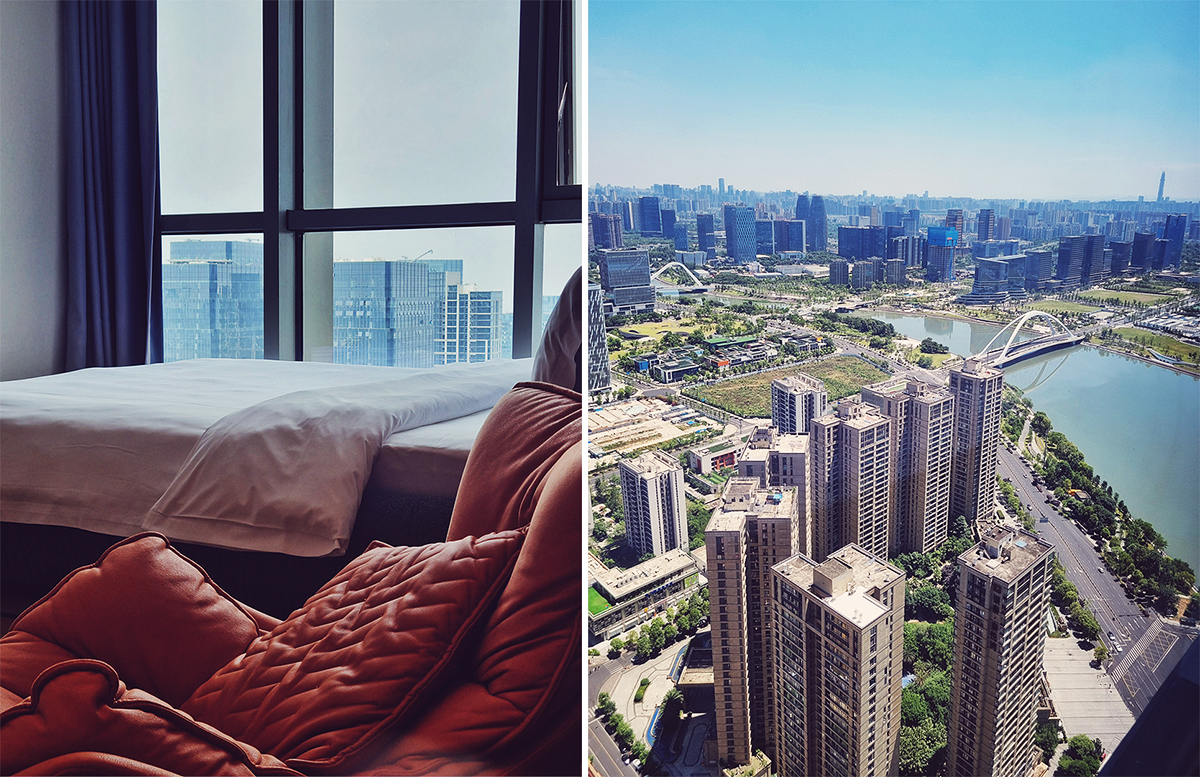
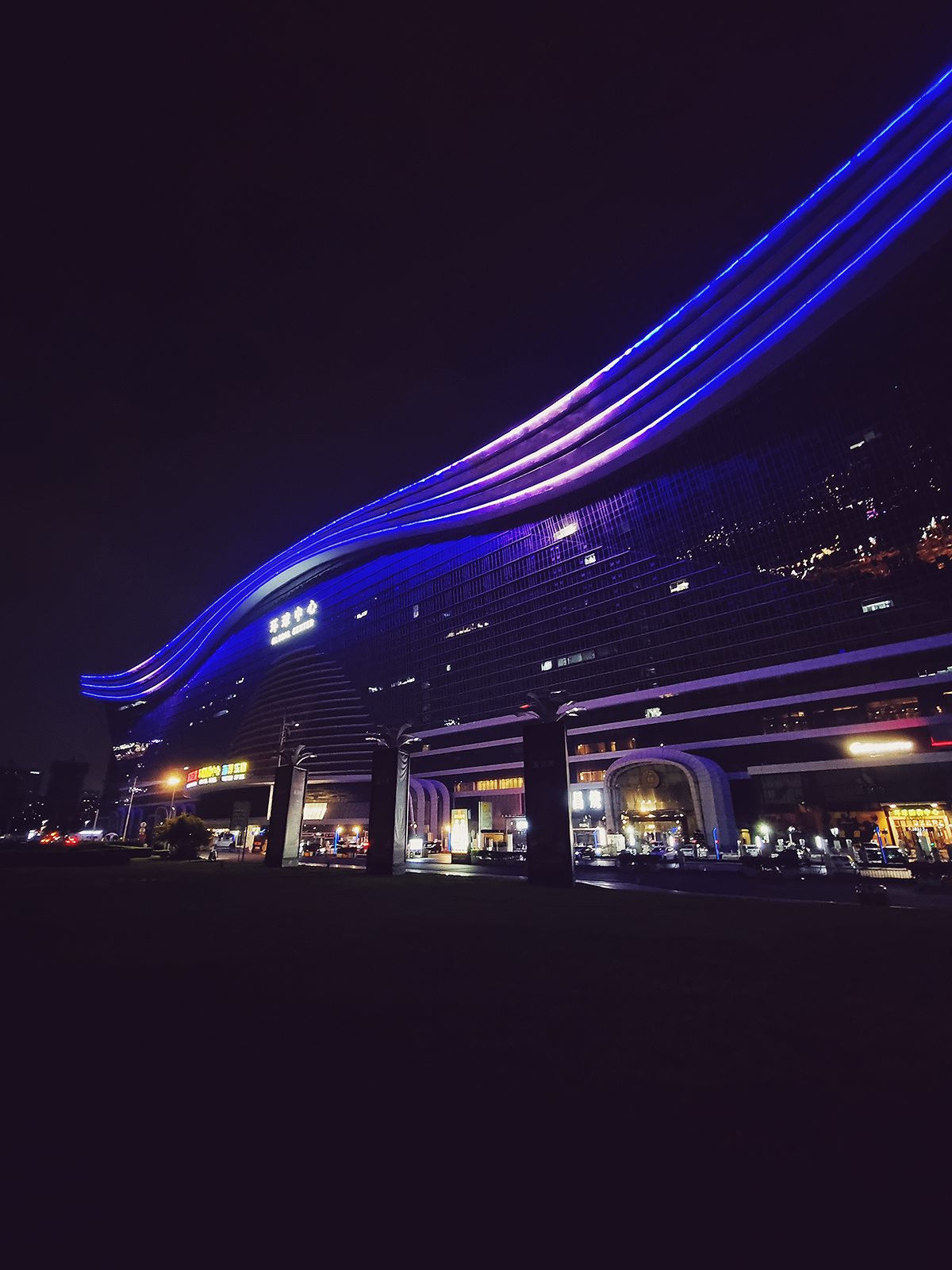
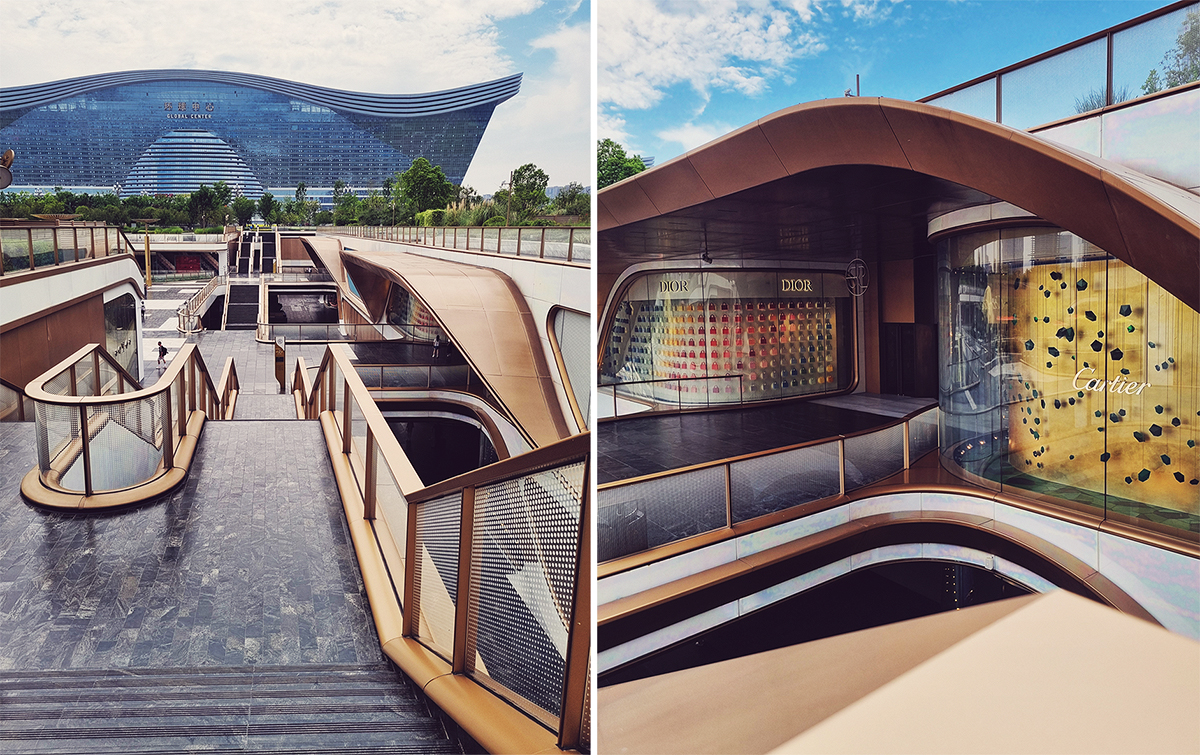
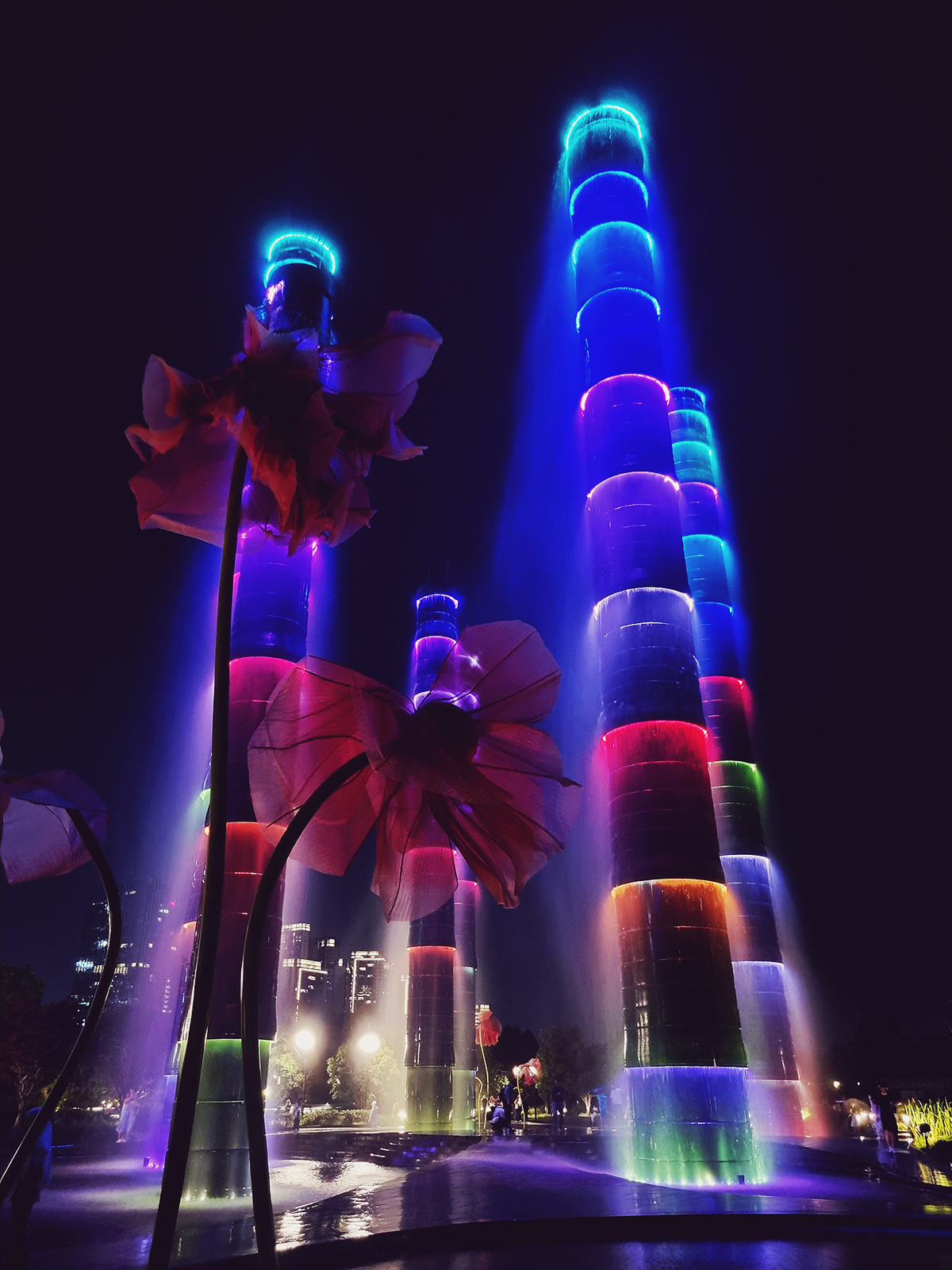
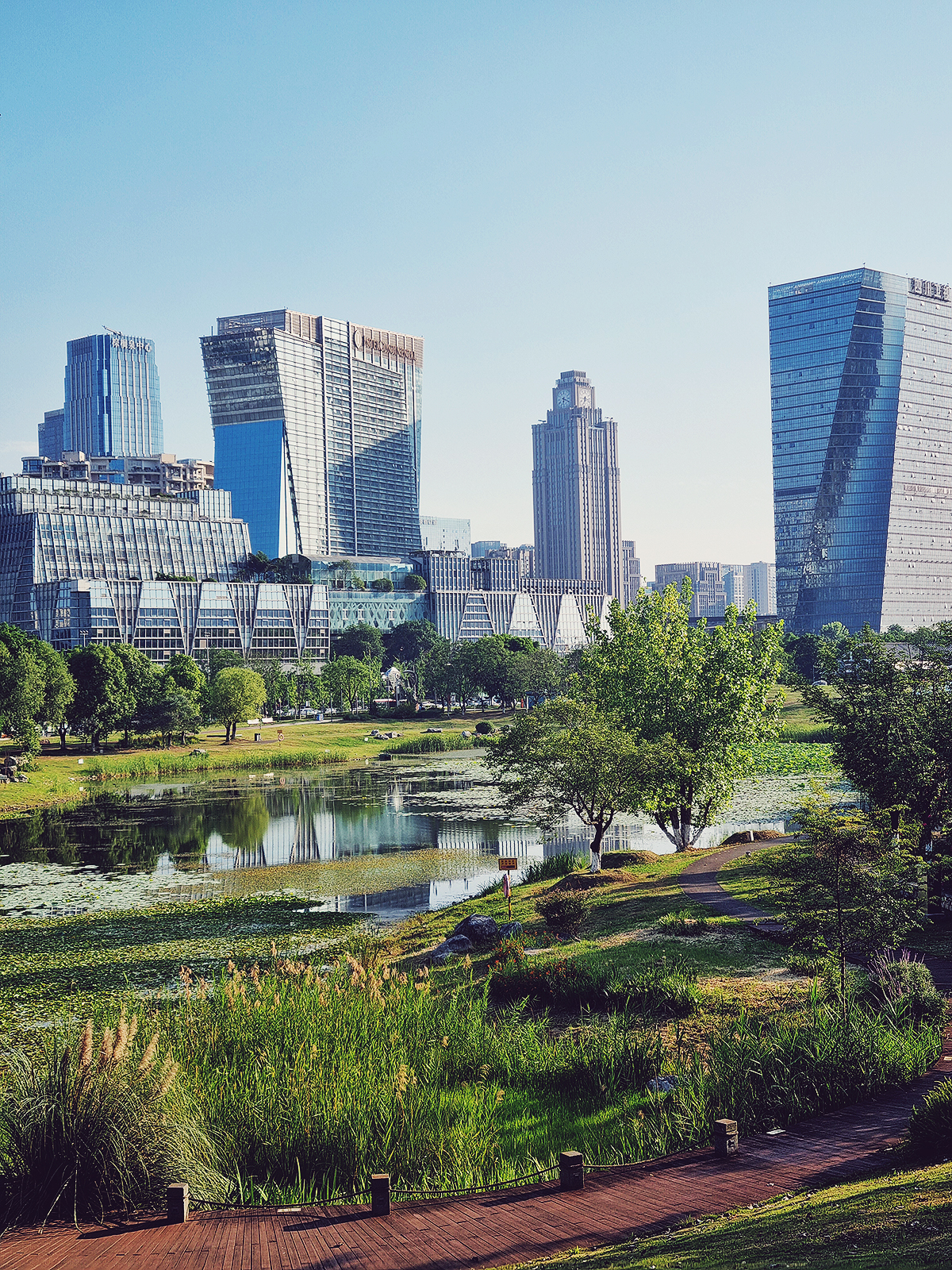
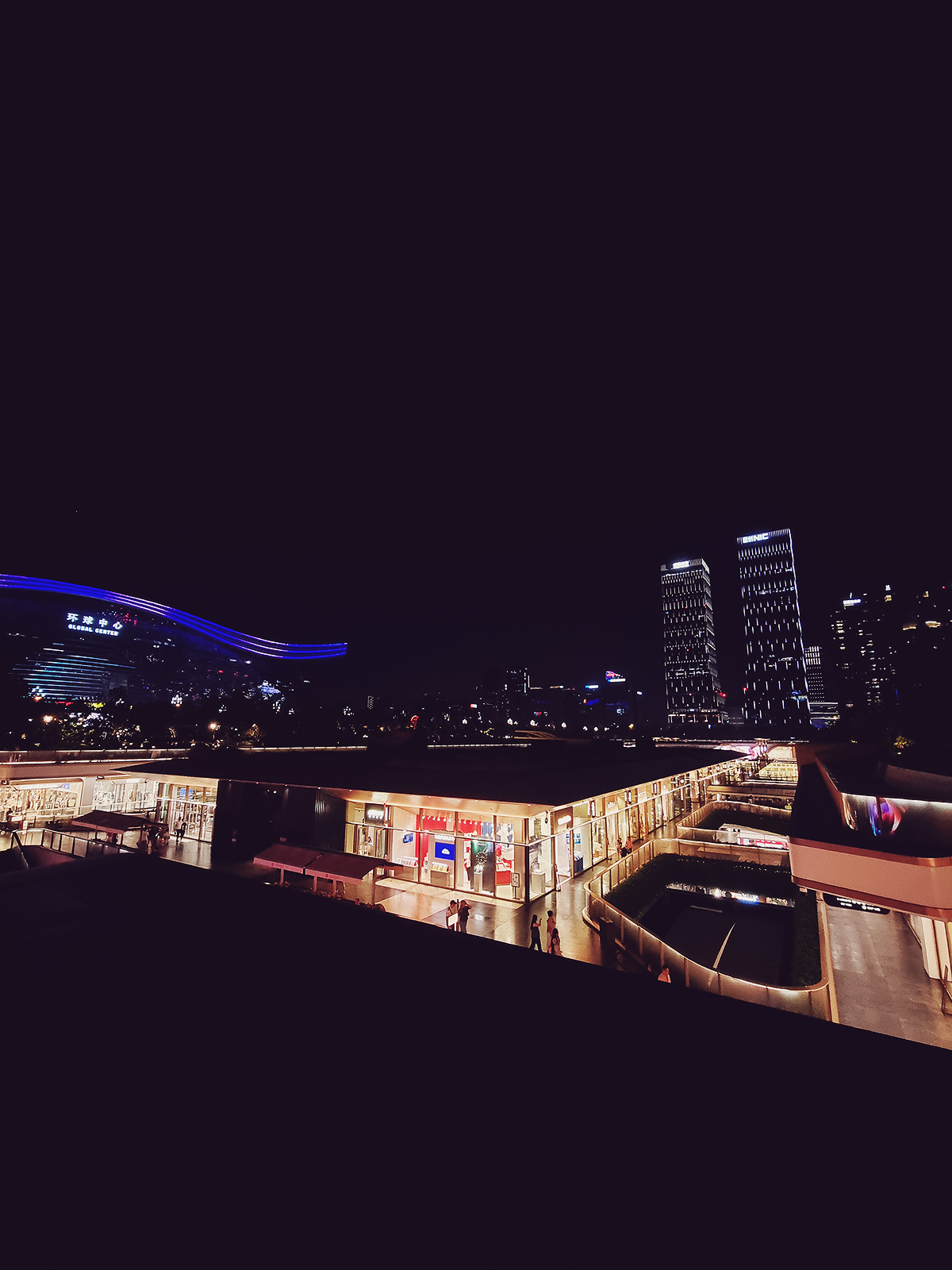
Our 52nd floor hotel room in the New Tianfu Area offered, like in Chongqing, a bed closer to the sky. It is a massive, extraordinary vast area that features striking modern architecture, including the glowing Tianfu Twin Towers along Jiaozi Avenue and the futuristic, circular Jiaozi Ring pedestrian bridge. It also houses The Global Center (recognized as the world’s third-largest building by total floor area), SKP Chengdu (China’s first luxury “sunken” shopping mall with a public botanical park above) and the famous Tower of Life fountain (every evening the installation lights up in cycling neon gradients, blues, and rainbow colors synchronized with water pulses and light patterns).
The temples were also amazing:
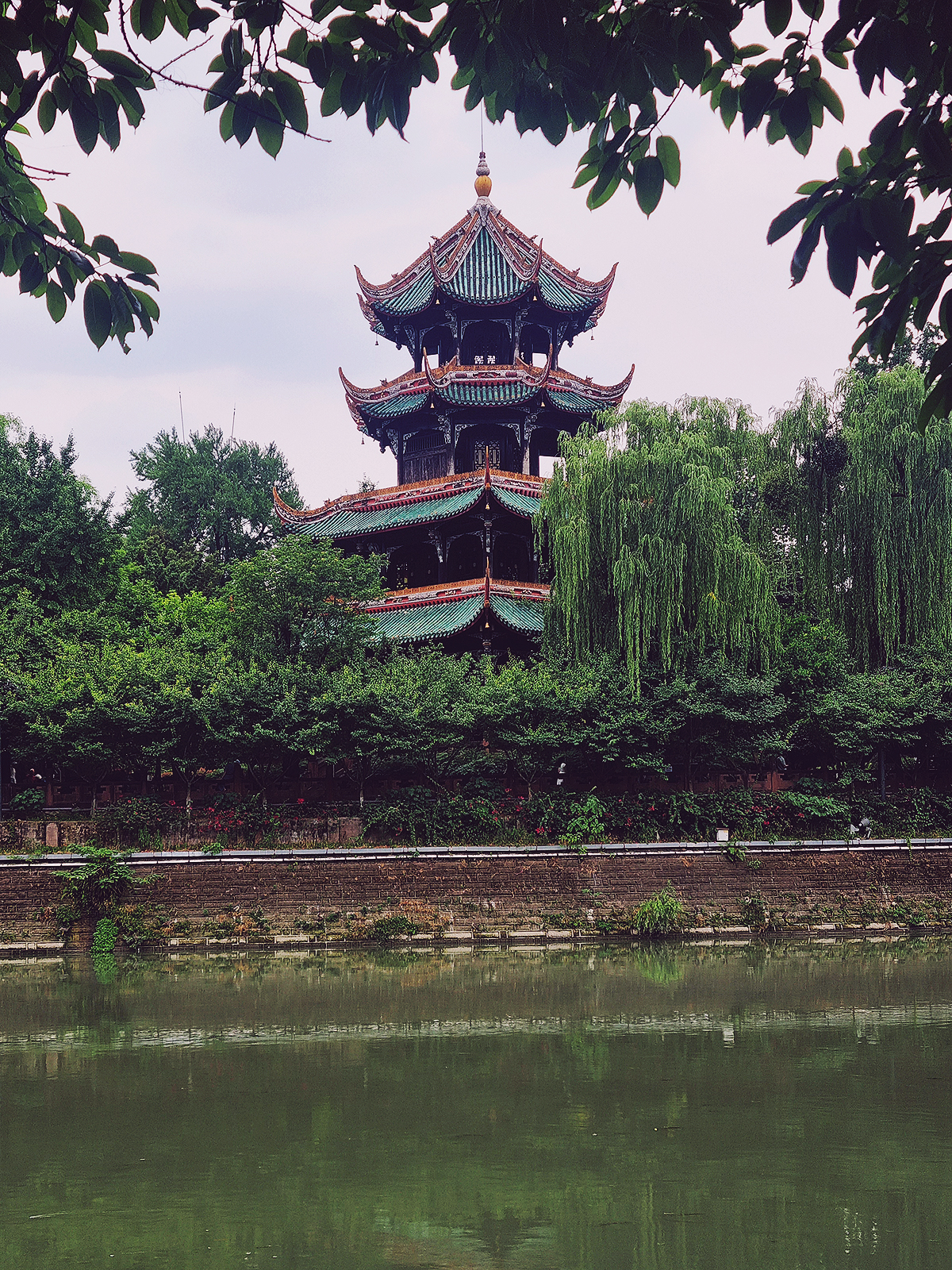
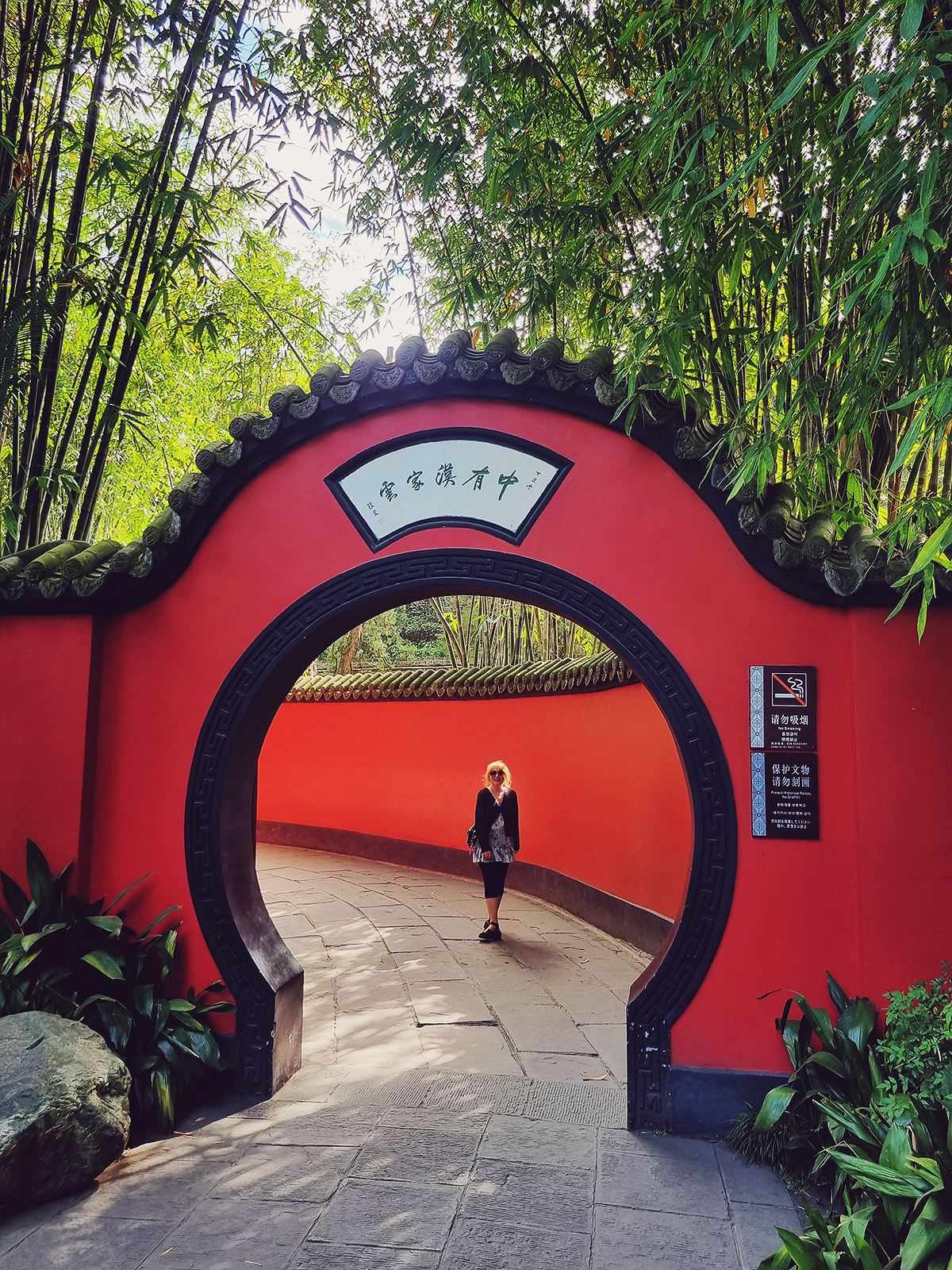
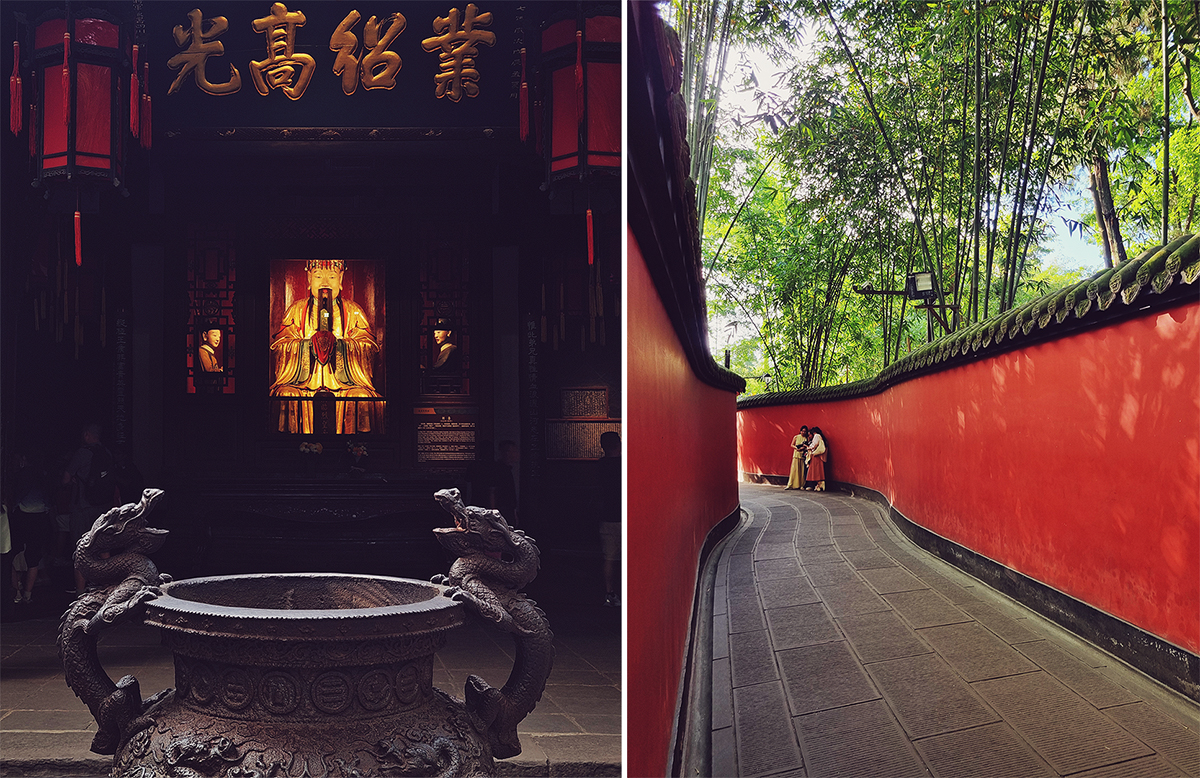
Wuhou Shrine – the most cinematic and amazing temple I have ever seen 🫰
-
Sole Joint Emperor-Minister Temple: It is the only sanctuary in China where a monarch (Emperor Liu Bei) and his prime minister (Zhuge Liang) are enshrined together.
-
Literary Cypress Forest: The ancient cypresses lining the central walkways are so famous that Tang Dynasty poet Du Fu immortalized their “dense green shade” in his classic poetry.
-
The Crimson Icon: Its winding Red Wall Passage—where curved red garden walls are framed by overhanging bamboo—is one of the most photographed heritage paths in Sichuan.
-
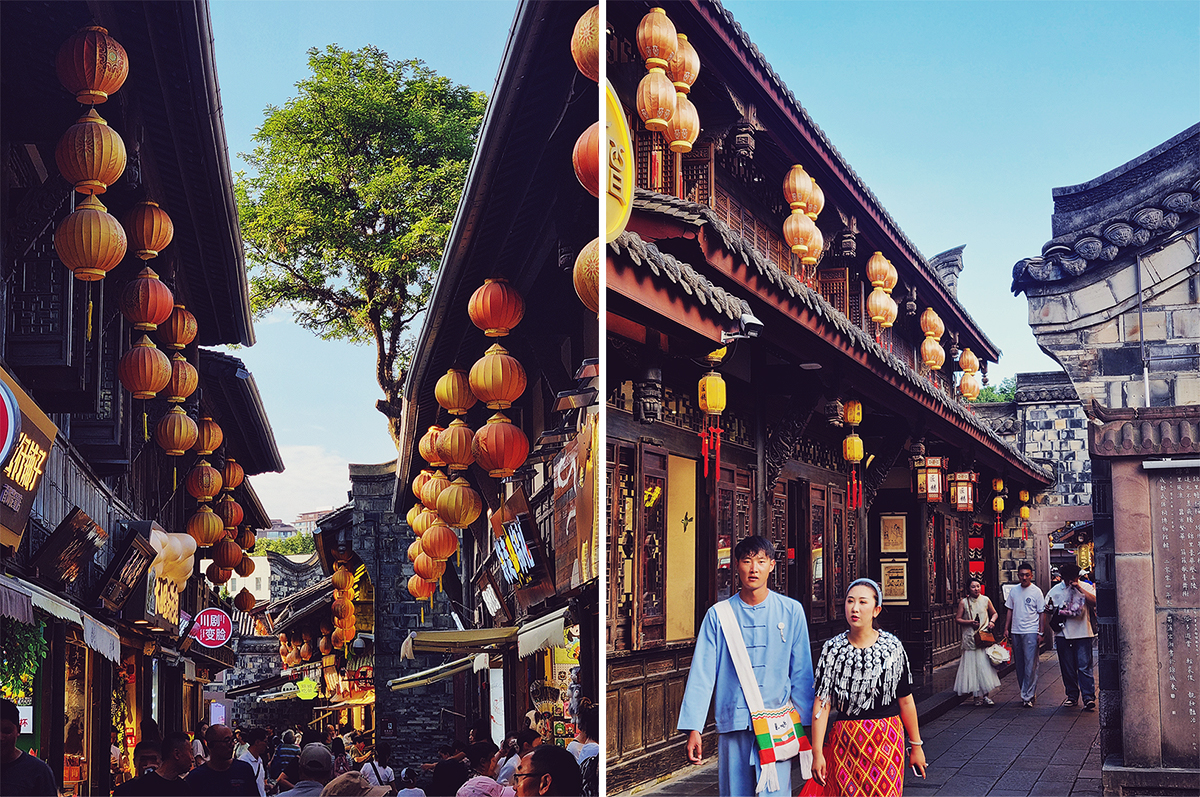
Neighbor to History: The complex sits directly adjacent to Jinli Street, letting you walk straight out of the quiet historical temple grounds into one of Chengdu’s oldest commercial streets.
Qingyang Palace
-
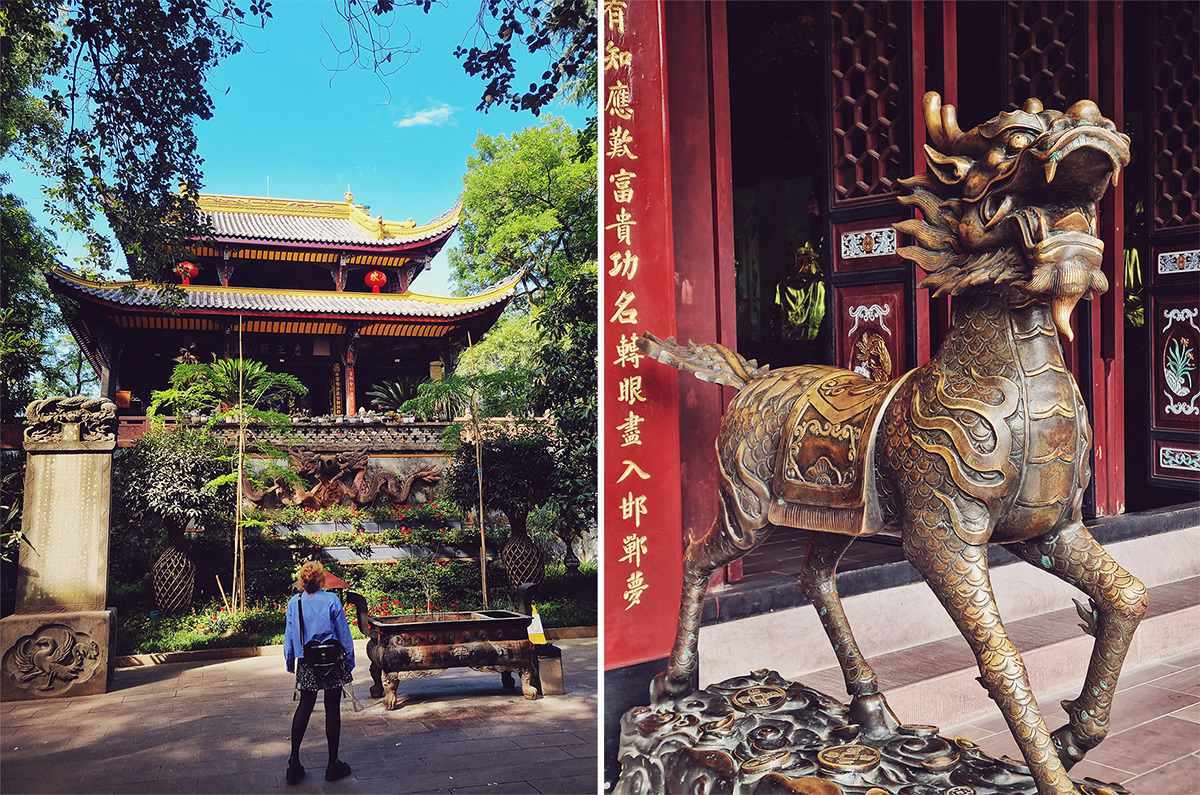
Taoist Heritage: Founded during the Zhou Dynasty, it is widely considered one of the oldest, most important Taoist temples in Southwest China.
-
The Legendary Bronze Goats: The main hall houses two famous bronze goat statues; one is a mythical hybrid creature featuring the distinct body parts of all twelve Chinese zodiac animals.
-
Tang Royalty Tribute: At the very top elevation of the complex sits Tangwang Hall, built to honor the Tang Dynasty emperors who once sought refuge in Chengdu during wartime.
-
Cultural District Anchor: The temple grounds connect directly to Culture Park and sit right across from Chengdu’s music and performing arts schools, making it a peaceful spiritual oasis in the heart of the arts district.
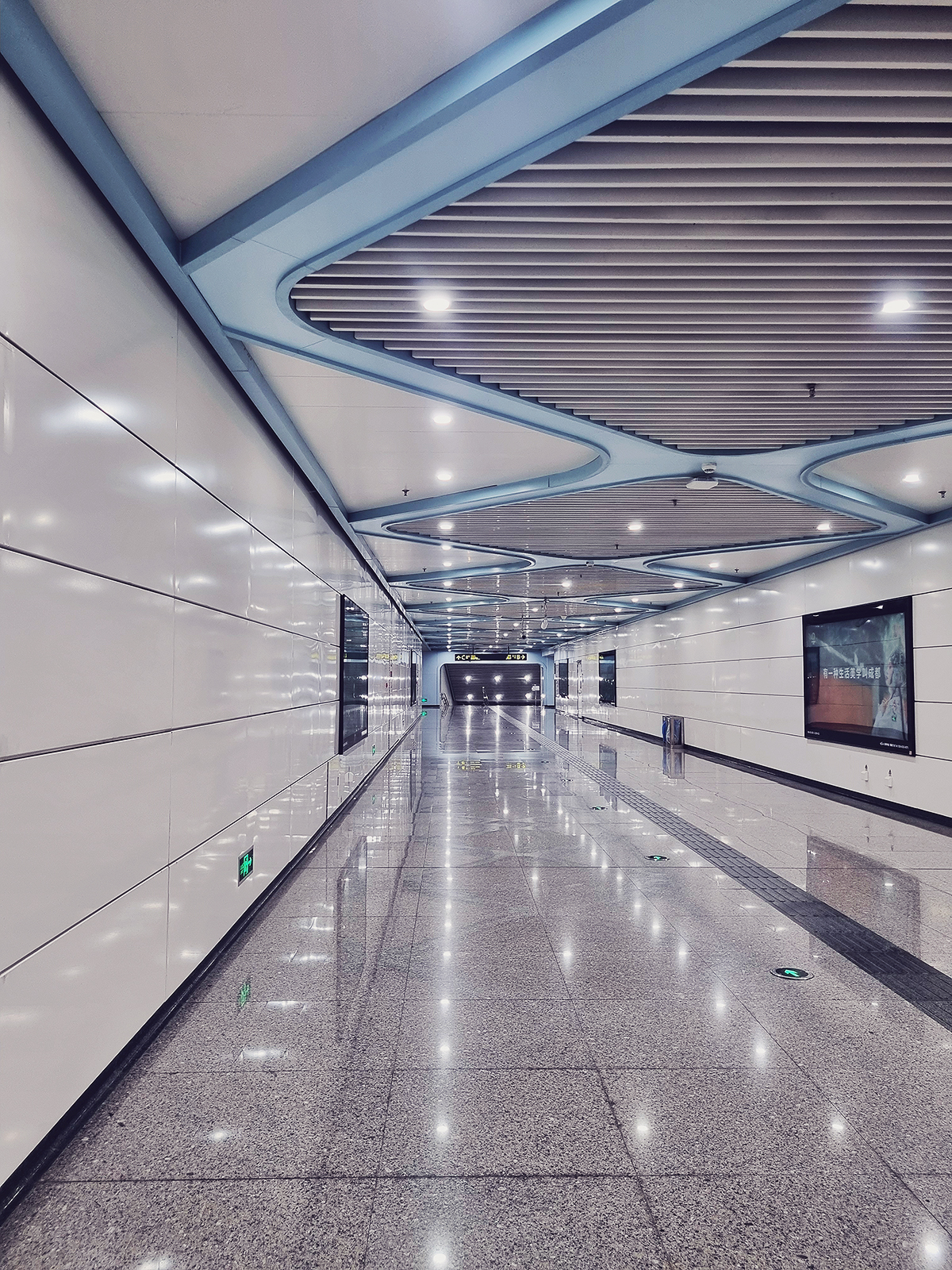
The vibe of Chengdu is an oasis of green relaxation. The metro stations are huge and super clean. The food is great. The language barrier was a bit tough here, as they are more afraid than other parts in China to speak English with you. Some venture out and are very helpful. The large areas and cityscapes are truly out of this world. A very comforting and pleasant stay we had in Chengdu.
As always,
 .
.What I wore: Dress // Uniqlo, Cardigan // Uniqlo, Shoes // Altercore, Bag // Dr. Martens, Shirt // Pull & Bear.
.
Thanks for dropping by, see my other post from Chongqing – The New York of China and also #thecyberpunkcity.
For more of China captured in photos and videos please consider following me on my socials:
Facebook // Instagram // Tumblr
.



No Comments