
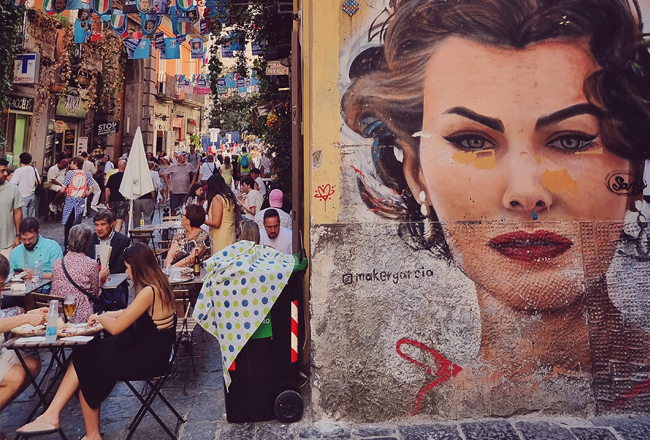
There is a famous saying: “Vedi Napoli e poi muori” (see Naples and die). After three days of losing myself in its narrow, alleyway laced heart, I get it. Naples doesn’t ask for your attention; it demands all of your senses.
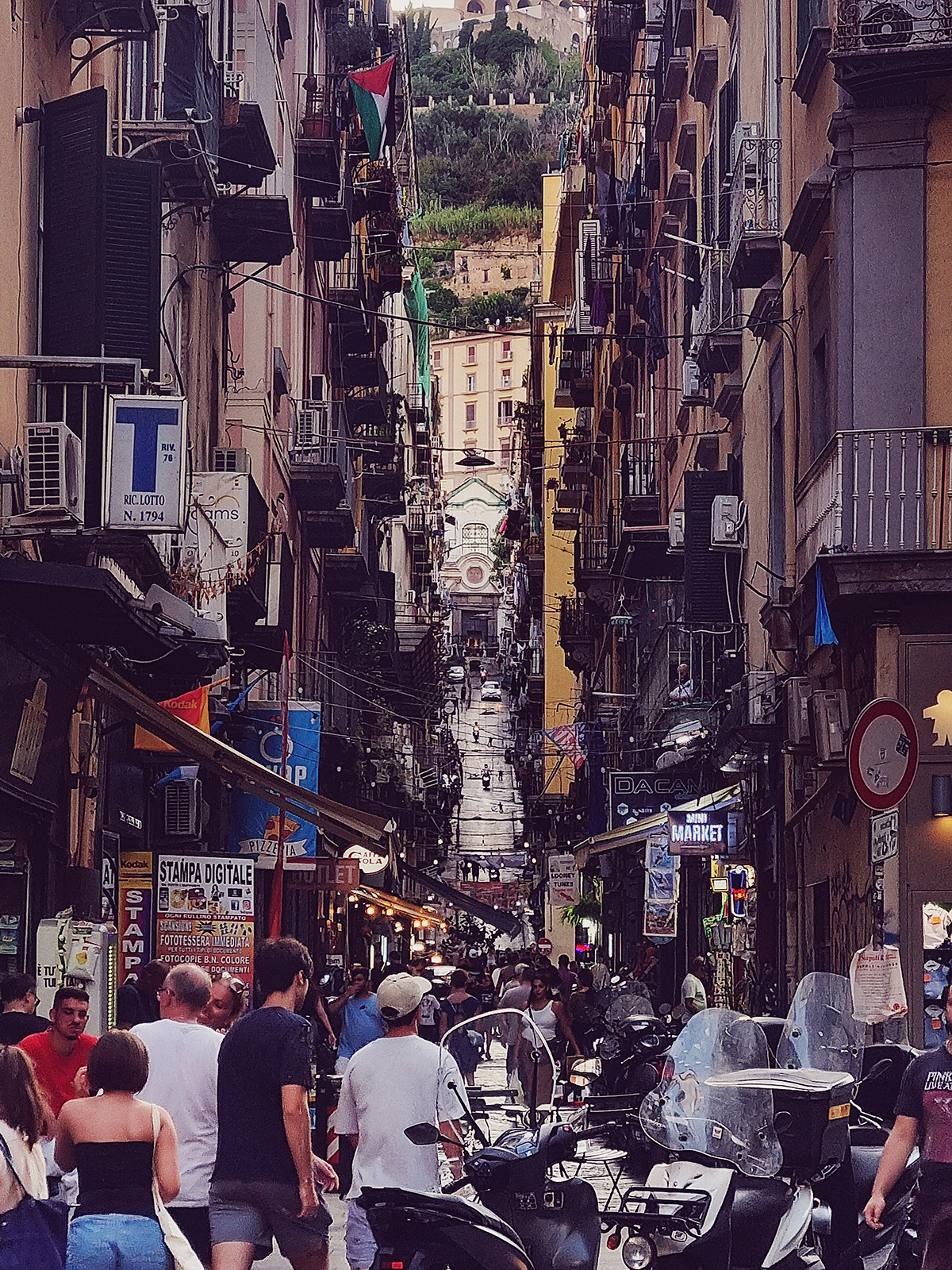
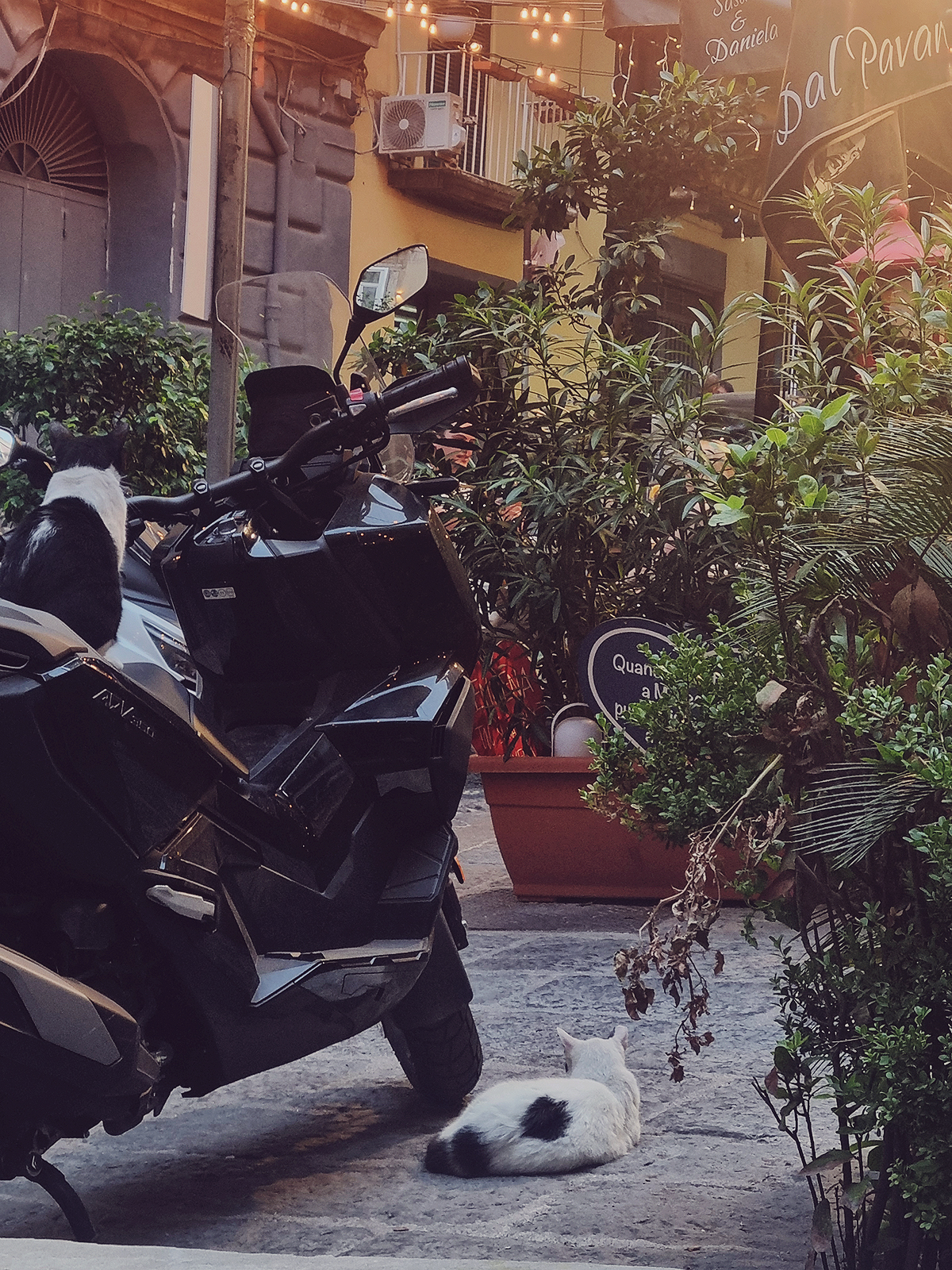
It’s a city constructed like a geological site of art and history, where centuries literally sit on top of one another. Naples is Caravaggio’s city in spirit. He fled there in the early 1600s after committing a murder in Rome, and the city’s intense contrast of harsh shadows and piercing sunlight bled directly into his work. You feel that exact same drama walking down every street in Centro Storico, the light cutting through tall, grand palazzi straight onto laundry lines and crumbling plaster below.
If you’re thinking of going I suggest September, still warm enough, but not crazy hot. And I have to say, flying in and out of Naples, the coastal views from above are phenomenal. Here’s 7 spots you won’t want to miss if you go to Naples:
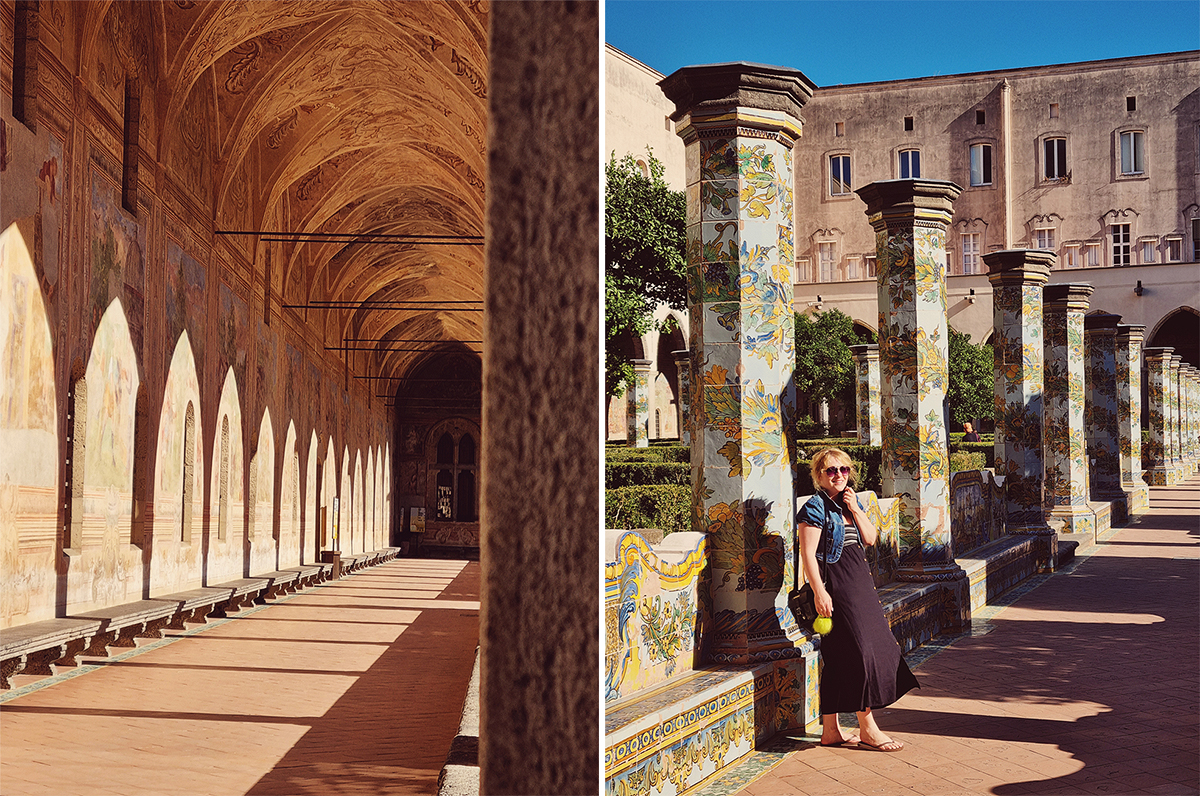
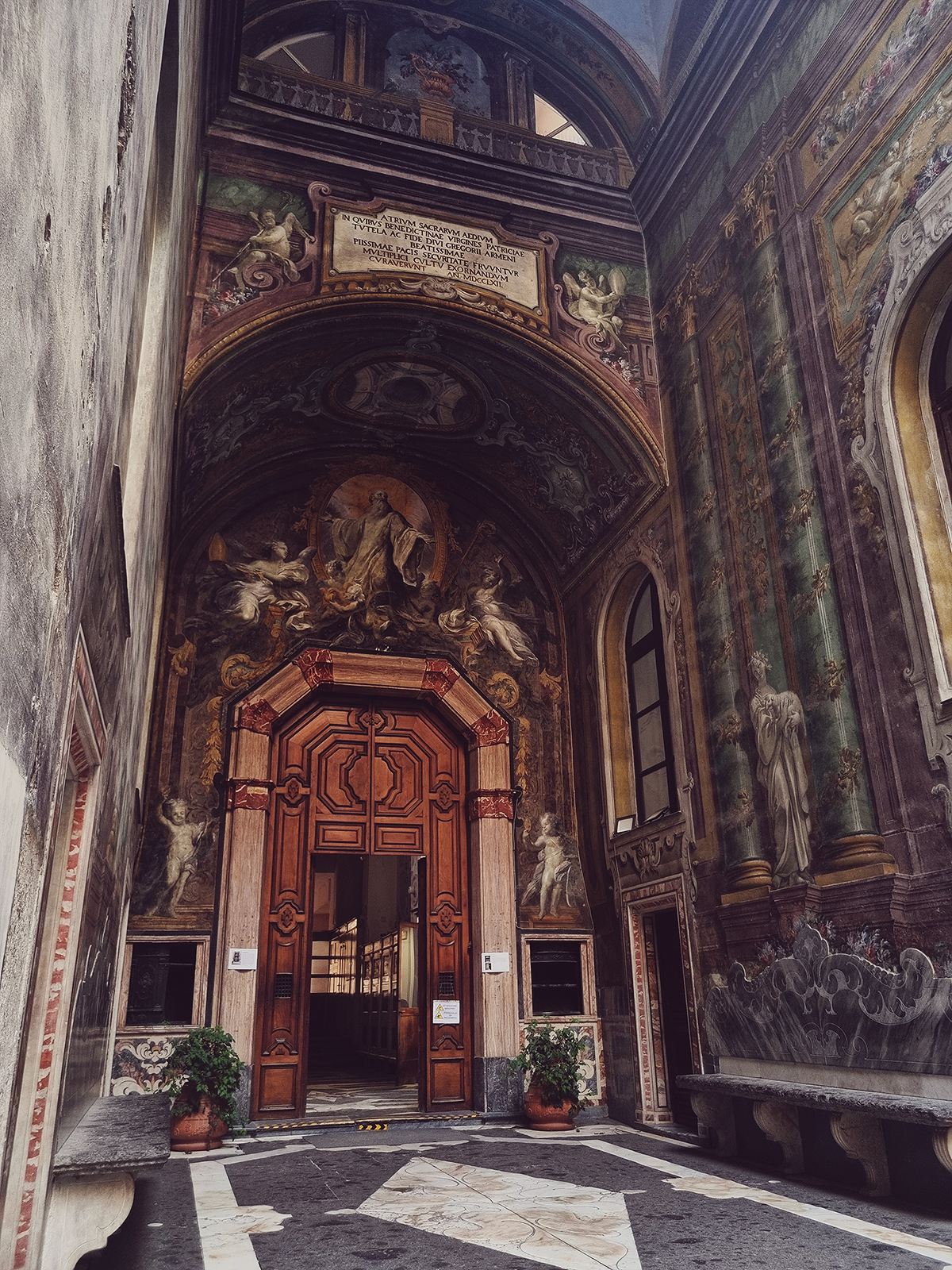
- Complesso Monumentale Di Santa Chiara – one of the most striking historical and artistic landmarks in Naples, offering a serene counterpoint to the bustling energy of the historic center. Built in the 14th century by King Robert of Anjou and Queen Sancia of Majorca, the complex holds centuries of royal, religious, and architectural history. The Clarist cloister is arguably the complex’s most famous feature. Redesigned in the 18th century in the Rococo style by architect Domenico Antonio Vacco, its octagonal pillars and cross-backed garden benches are entirely covered in hand-painted majolica tiles depicting vibrant botanical scenes, pergolas, and pastoral life.
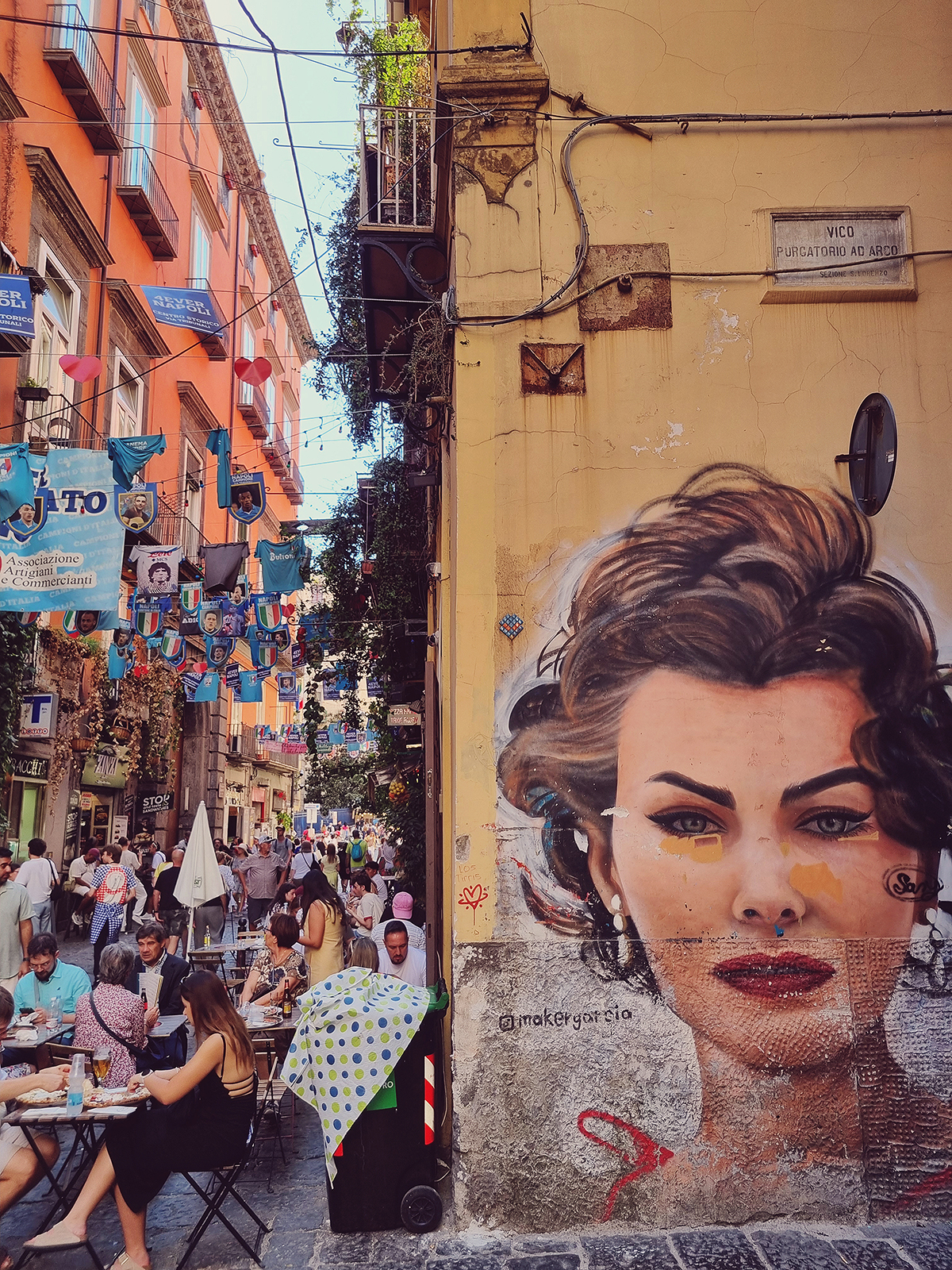
- Centro Storico – it preserves the exact street grid laid out by the ancient Greeks when they founded the city as Neapolis in the 6th century BCE. If you walk down its famous main artery, Spaccanapoli, you are essentially strolling along a plateia—the primary east-west road of the original Greek city plan—proving that beneath the vibrant, chaotic layers of modern Neapolitan life, the ancient bones of the city remain entirely intact.
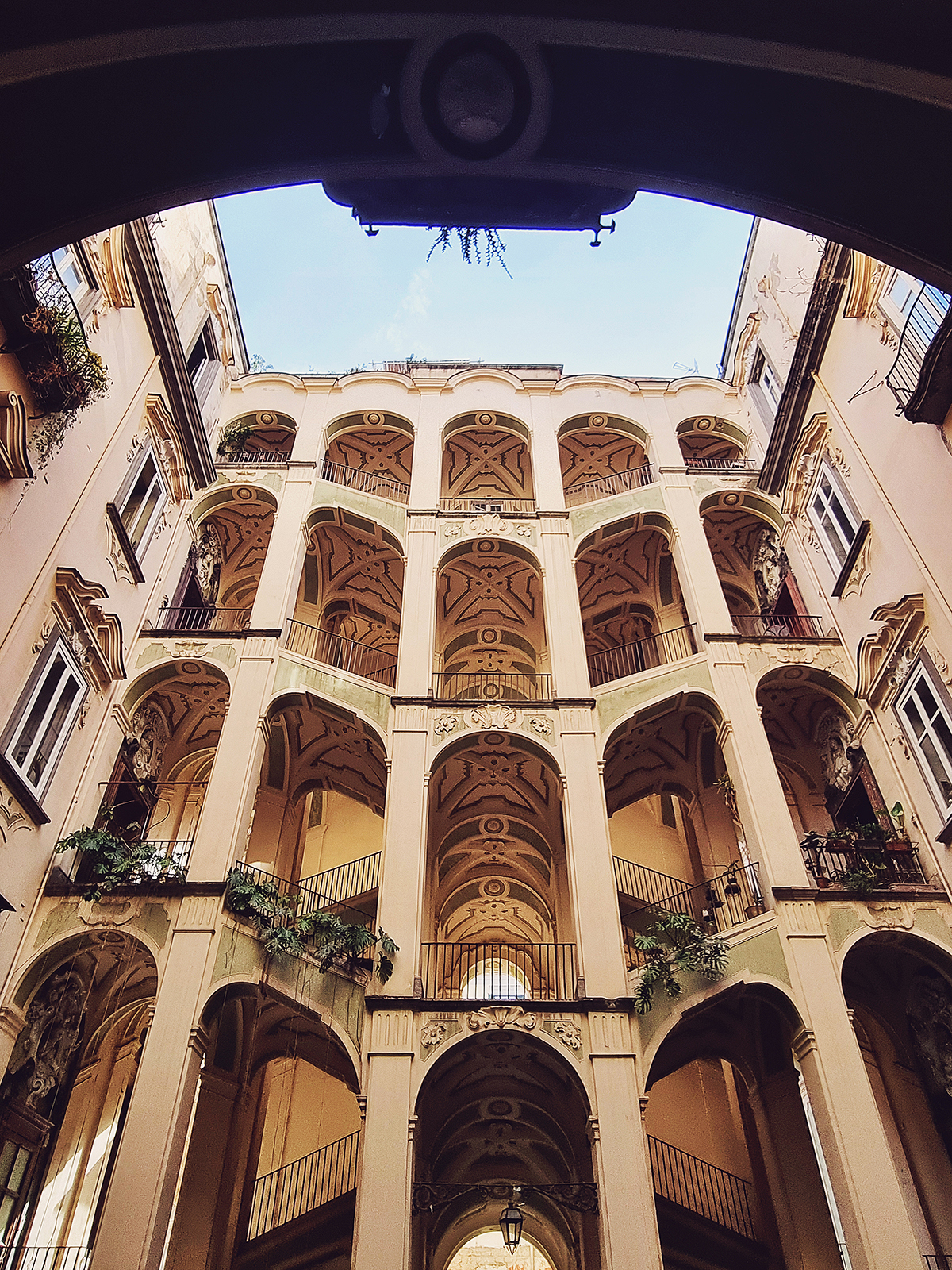
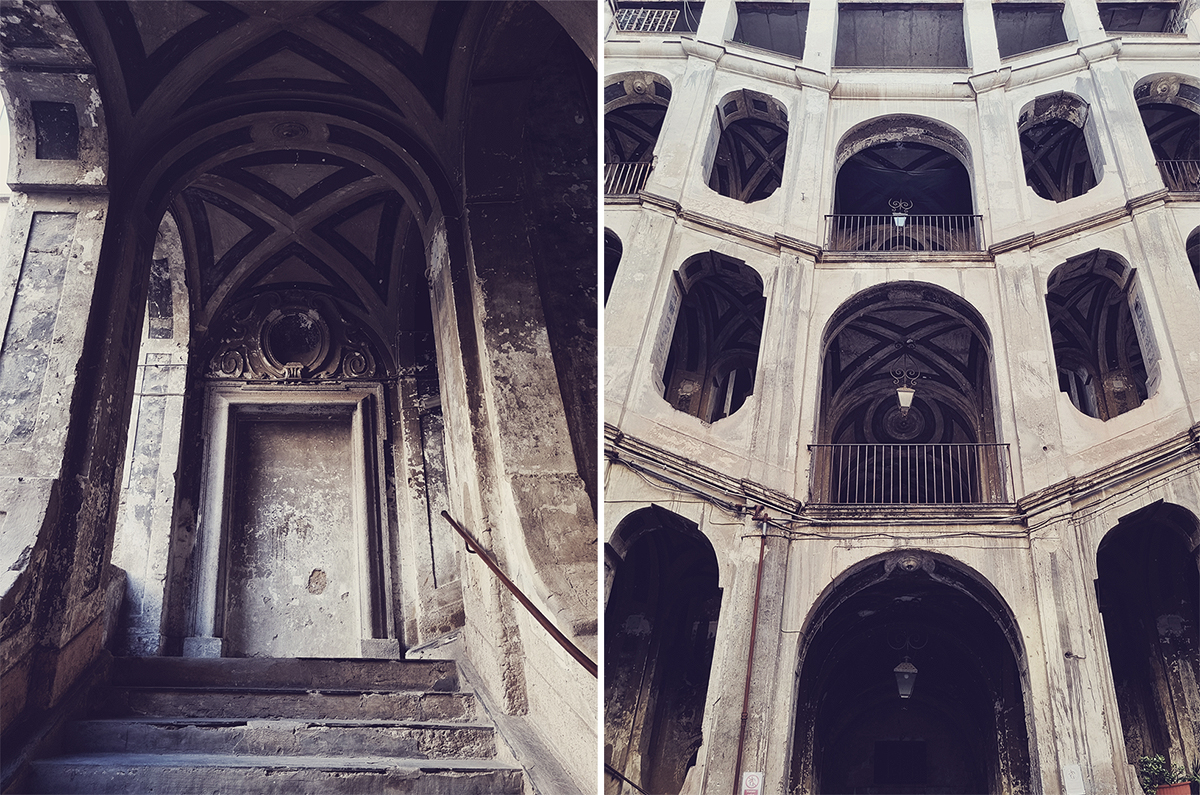
- The Palazzo dello Spagnolo – famous for its breathtaking, theatrical double-ramp open staircase. Designed in the mid-18th century by architect Ferdinando Sanfelice, the soaring interior courtyard stairs were conceived not just as a way to move between floors, but as an open-air stage where residents could see and be seen, blending rococo stucco ornamentation with dramatic architectural perspective.
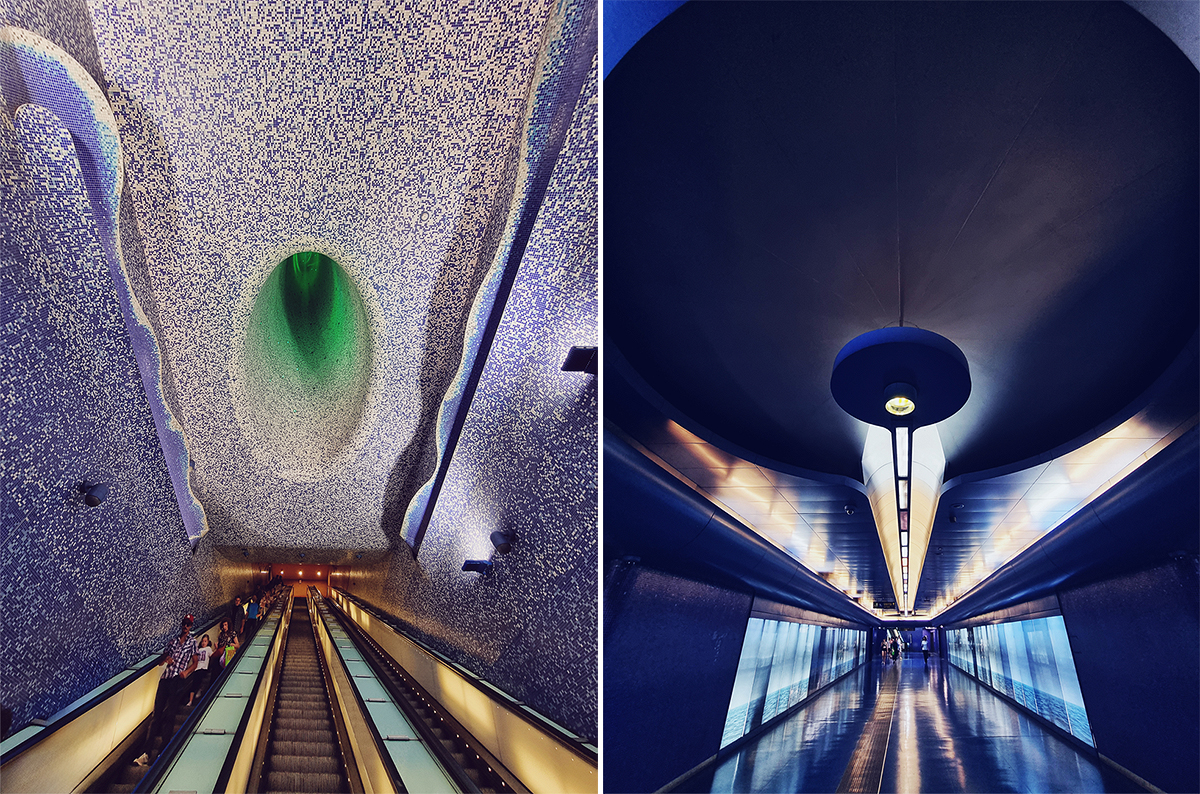
- Stazione Metro Toledo – Designed by Spanish architect Oscar Tusquets Blanca, the station’s central architectural feature is a giant, cone-shaped “crater” that funnels natural sunlight all the way down from the street level to the deepest underground platforms. As you ride the massive escalators up and down, you pass through mesmerizing installations of Bisazza mosaic tiles in shifting gradients of intense blue and white, designed by Robert Wilson to evoke the sensation of diving underwater or moving through a luminous sea.
- Palazzo Sanfelice – The palace is world-renowned for its breathtaking, double-flight open staircases in the inner courtyards. Sanfelice transformed structural stairwells into dramatic, curved visual stages that weave across the open air, blending geometry, light, and aristocratic showmanship. Because of its striking, surreal architectural perspective and decaying grandeur, the palace courtyard has frequently served as a dramatic backdrop for Italian and international cinema. It is a masterwork of Neapolitan Baroque architecture designed by architect Ferdinando Sanfelice in the early 18th century as his own family residence.
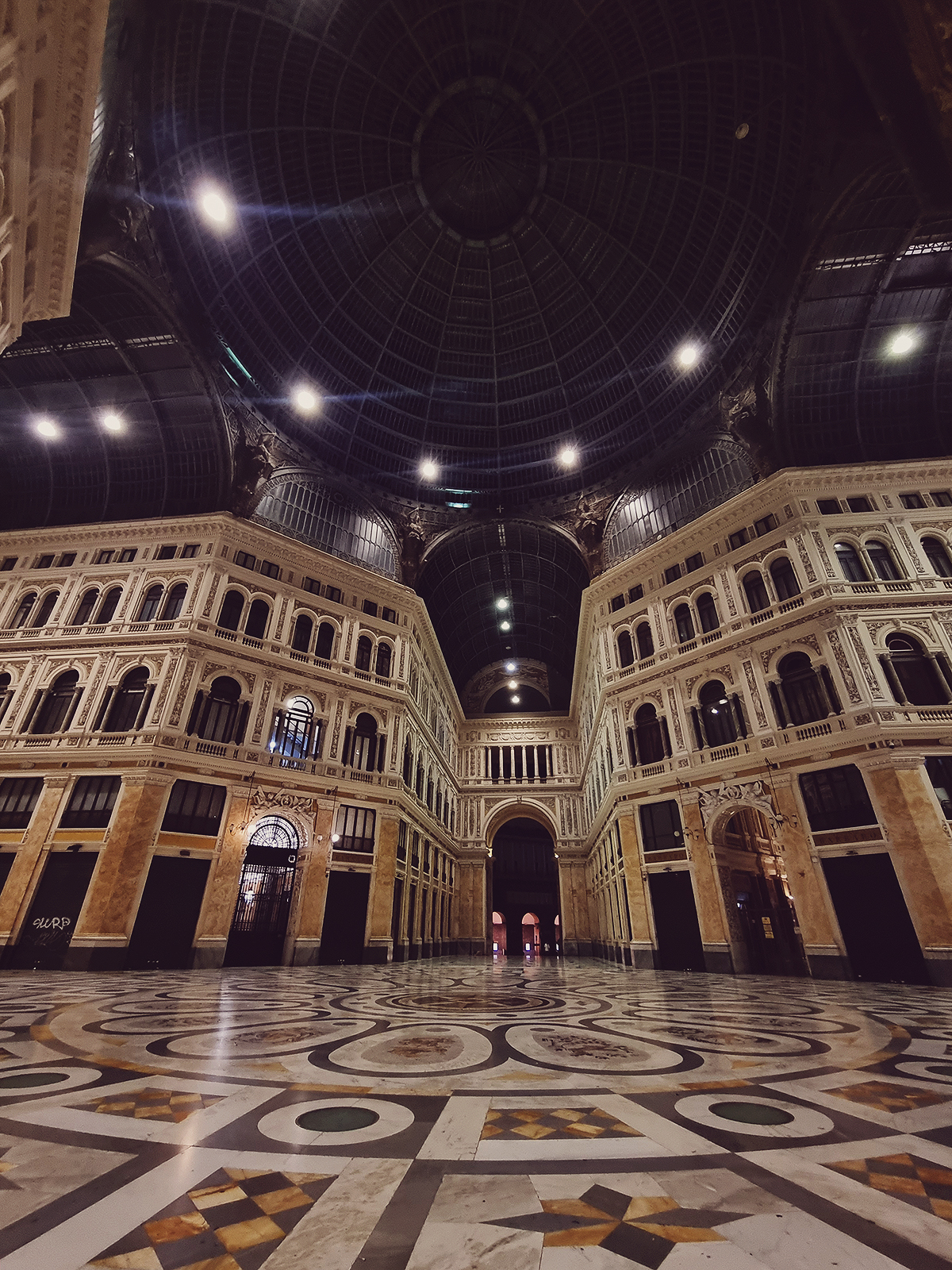
- Galleria Umberto I – Designed by Emanuele Rocco, the gallery features a soaring, cross-shaped iron and glass dome that rises 57 meters high, flooding the spacious interior corridors with natural light while protecting shoppers from the elements. The arcade was constructed during the risanamento—a massive period of urban sanitation and rebuilding in Naples following a devastating cholera outbreak. It was intended to revitalize the city’s commercial core and mirror the modern elegance of Milan’s famous Galleria Vittorio Emanuele II.
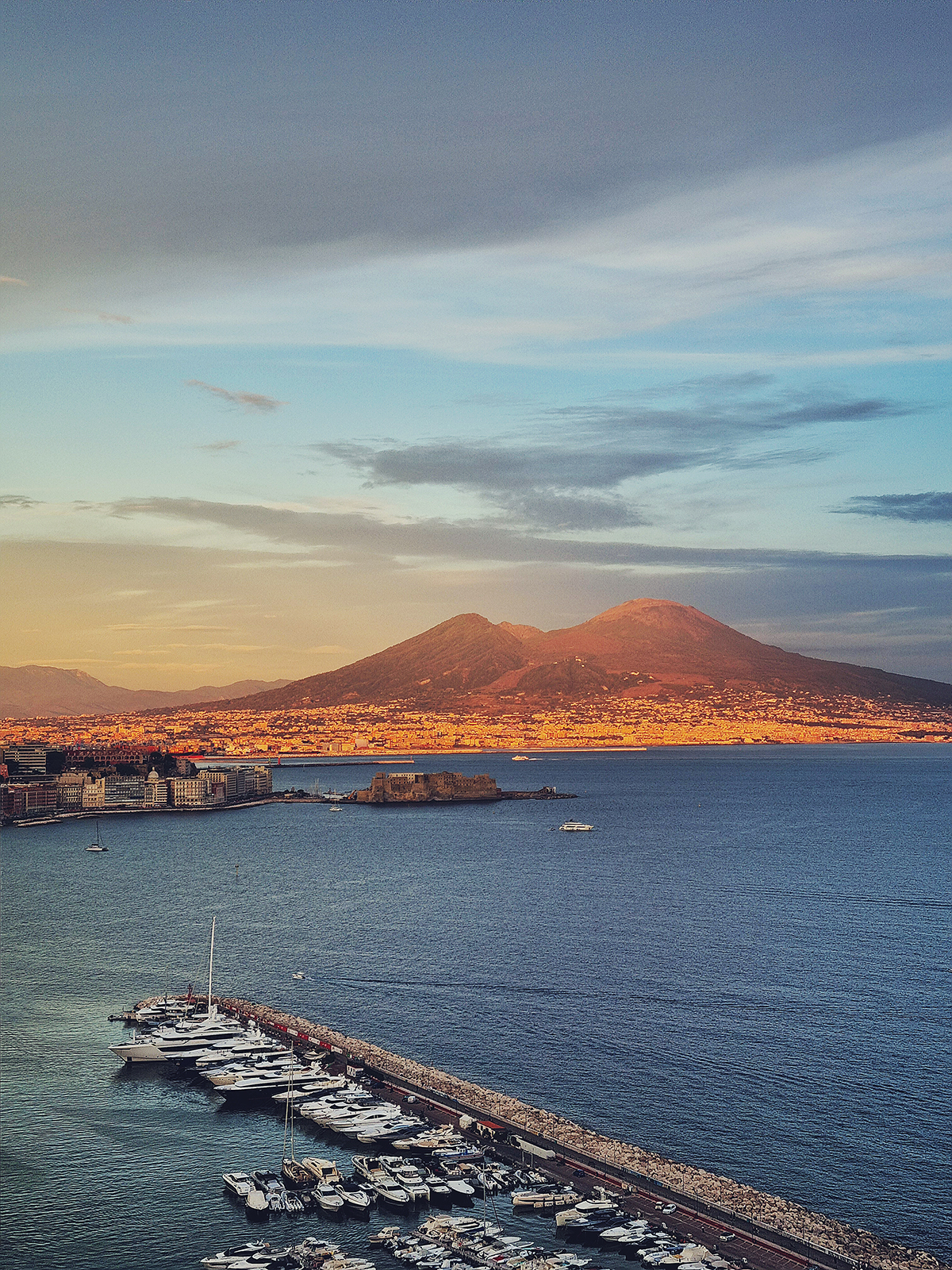
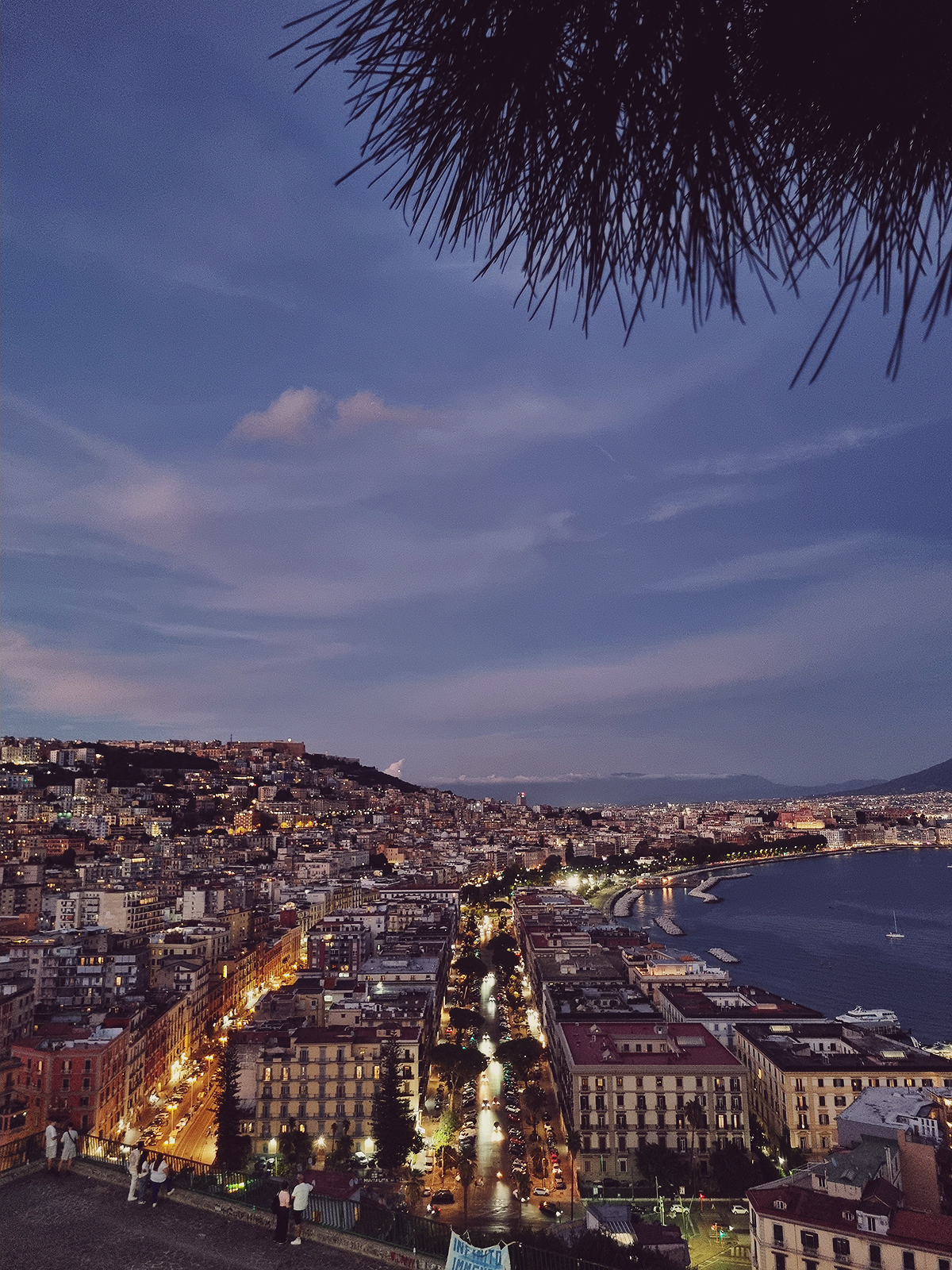
- Take the Funicolare Centrale for the best views of Naples. Take the funicular from Augusteo station (near Via Toledo) up to the Piazza Fuga terminal in Vomero. From there, it’s a short, pleasant walk through the neighborhood streets up to the terrace. Try heading up late in the afternoon to catch the sunset casting a golden glow over the bay and Vesuvius before the city lights turn on across the gulf.
As always,

.
Thanks for dropping by, see you next time.
If you like what you see, please consider following me for more travel and style inspirations:
Facebook // Instagram // Tumblr
.



No Comments